
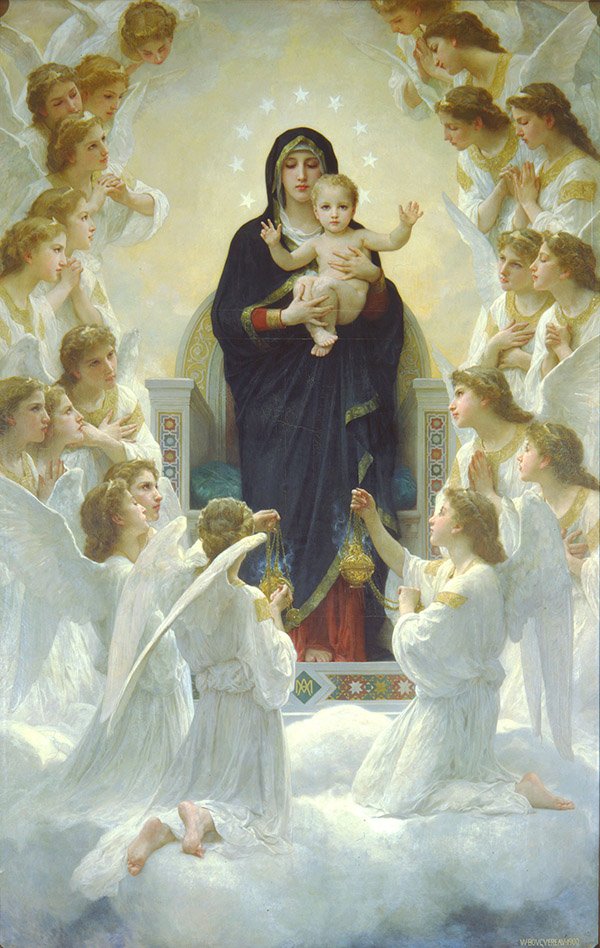
Mary, Mother of God
Year Recognized by the Church: 431 AD
Pope in Office: Pope Celestine I (422-432 AD)
Declared By: The Council of Ephesus
Feast Day: January 1 (Solemnity of Mary, the Mother of God)
Apparition: Not directly associated with an apparition.
Mary, Mother of God, also known as Theotokos (“God-bearer”), affirms Mary’s role as the mother of Jesus Christ, who is both fully divine and fully human. This title was officially defined at the Council of Ephesus in 431 AD to combat heretical teachings that questioned Christ’s divinity. By declaring Mary as the Mother of God, the Church underscores her integral role in the mystery of the Incarnation and her unique position in salvation history.
Dedication to Mary, Mother of God
O Mary, Mother of God and our mother, we offer ourselves to your loving care. Today we choose you as our mother, guide and friend. May we always be faithful to you, and desire, say and do only what is pleasing to you. O most tender and loving mother, we beg you through the goodness of our Lord Jesus Christ, your Divine Son, to keep us especially dear to you and to obtain for us the strength to lead a holy life, a life of goodness, purity and love, offered to God in thanksgiving and praise. Be present with us at all times, O Blessed Virgin Mary, and especially at the hour of our death. Then Mary protect us from the Evil One, the enemy of our souls. Guide us safely into the presence of Jesus, the Risen Lord, so that we may, with you and all the saints, share His life, happiness and love, forever. Amen.
Resources for Mary, Mother of God
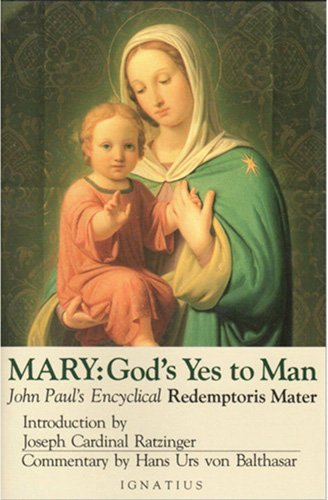
Mary: God’s Yes to Man
Saint JP II
A profound reflection on Mary’s role in salvation history and her relationship with Christ and the Church.
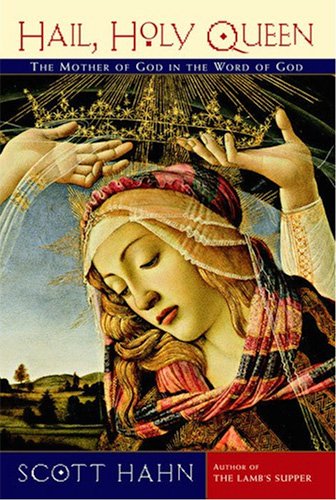
Hail Holy Queen
Dr. Scott Hahn
A theological exploration of Mary’s role through Scripture, offering a deeper understanding of her as the Mother of God.
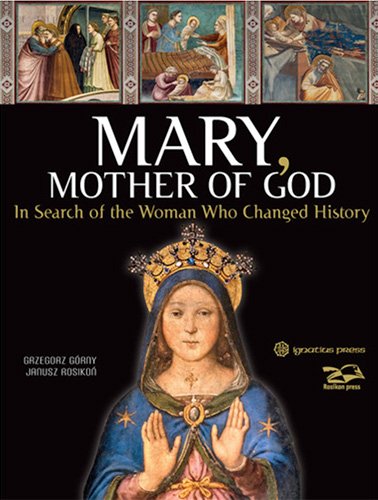
Mary Mother of God
Grzegorz Górny
A richly illustrated and thoroughly documented exploration of the life of Mary.
Theotokos: A Theological Encyclopedia of the Blessed Virgin Mary
Michael O’Carroll
A comprehensive reference that dives into the theology, history, and devotion surrounding Mary, including her title as Mother of God.
Mary, Theotokos: Mother of God
When a young girl in Nazareth heard the greeting of an angel—“Hail, full of grace”—she could not have imagined how her answer would change the course of history. With her simple yes, Mary welcomed into her womb the eternal Word of God. What followed was no ordinary birth. The child she carried was both fully human and fully divine.
The Church would later give Mary a title that captures this astonishing truth: Theotokos, a Greek word meaning God-bearer or Mother of God. This title is not about Mary being the source of God’s divinity, but about affirming who her Son truly is: one Person, Jesus Christ, who is both God and man. By calling Mary Theotokos, the Church proclaims the central mystery of the Incarnation—God Himself entered the world through her.
The Catholic Church treasures this title, “Mother of God,” because it is rich in theological meaning and deeply rooted in tradition. It reflects Mary’s unique role in salvation history and safeguards the very heart of Christian belief about Jesus Christ.
The Council of Ephesus and the Defense of Theotokos
By the early 400s, not everyone agreed on how to speak of Mary. Nestorius, Patriarch of Constantinople, argued that she should be called Christotokos (“Mother of Christ”) rather than Theotokos, fearing that the latter confused Christ’s divinity and humanity. Yet his position risked dividing Christ into two separate persons—one human and one divine.
In 431 AD, bishops from across the Christian world gathered in the city of Ephesus to resolve the dispute. At the center stood St. Cyril of Alexandria, who defended the unity of Christ. He insisted that Jesus is one divine Person with two natures—fully God and fully man. Because Mary bore this one Person, she is rightly honored as Theotokos, the Mother of God.
The bishops issued their decision in forceful language: “If anyone does not confess that Emmanuel is truly God and that the holy Virgin is therefore the Mother of God, since she gave birth according to the flesh to the Word of God made flesh, let him be anathema.”
According to Cyril’s own letters, the people of Ephesus responded with joy, escorting the bishops back to their lodgings in triumph. For them, this was not simply a matter of words but a defense of the faith itself—that the Savior they worshipped was truly God made man.
The Importance of the Title
The title Mother of God safeguards the central truth of Christianity: the Incarnation. To deny Mary this title would be to divide Christ, undermining His role as Redeemer. In honoring Mary as Theotokos, the Church reaffirms that Jesus Christ is one divine Person who is both fully human and fully divine.
At the same time, the title highlights Mary’s unique role in salvation history. By her humble fiat—her willing “yes” to God’s plan—she became the mother of the Savior. Her cooperation with grace makes her not only the Mother of God but also a model of faith for the entire Church.
Scriptural and Doctrinal Foundations
Scripture supports this title. Elizabeth greets Mary as “the mother of my Lord” (Luke 1:43). St. Paul writes that God sent His Son, “born of a woman” (Gal. 4:4). And Isaiah prophesied, “Behold, the virgin shall conceive and bear a son, and shall call his name Immanuel” (Isa. 7:14).
The Catechism of the Catholic Church confirms this faith: “The One whom she conceived as man by the Holy Spirit, who truly became her Son according to the flesh, was none other than the Father’s eternal Son. Hence the Church confesses that Mary is truly ‘Mother of God’” (CCC 495). The Catechism also calls her the “all-holy ever-virgin Mother of God” and the “Seat of Wisdom,” prepared by the Spirit to be the dwelling place of the Son (CCC 721).
The saints bear witness across the centuries. St. Augustine reminded believers that Mary was blessed not only because she bore Christ in her body but because she believed in Him with her heart. St. John Damascene called her “the throne of the King.” St. Maximilian Kolbe encouraged Christians never to fear loving Mary too much, for one can never love her more than Jesus did.
Conclusion
The title Theotokos is more than a word from the past—it is a confession of faith. It proclaims that Jesus is truly God and truly man, and that Mary, by God’s grace, became His mother.
Every time the Church invokes her as “Mother of God,” it safeguards the truth of the Incarnation and honors the woman whose yes opened the way for salvation. In Mary, the mystery of God drawing near to humanity becomes personal, visible, and unforgettable.
Theological Support for Mary, Mother of God
Biblical Reference
Luke 1:35 – “The Holy Spirit will come upon you, and the power of the Most High will overshadow you; therefore the child to be born will be called holy—the Son of God.”
Luke 1:43 – “And why is this granted to me, that the mother of my Lord should come to me?”
Galatians 4:4 – “But when the fullness of time had come, God sent forth his Son, born of woman, born under the law.”
Isaiah 7:14 – “Therefore the Lord himself will give you a sign. Behold, the virgin shall conceive and bear a son, and shall call his name Immanuel.”
Catechism of the Catholic Church
CCC 495 – “Called in the Gospels “the mother of Jesus,” Mary is acclaimed by Elizabeth, at the prompting of the Spirit and even before the birth of her son, as “the mother of my Lord.” In fact, the One whom she conceived as man by the Holy Spirit, who truly became her Son according to the flesh, was none other than the Father’s eternal Son, the second person of the Holy Trinity. Hence the Church confesses that Mary is truly “Mother of God” (Theotokos),”
CCC 509 – “Mary is truly “Mother of God” since she is the mother of the eternal Son of God made man, who is God himself,”
CCC 721 – “Mary, the all-holy ever-virgin Mother of God, is the masterwork of the mission of the Son and the Spirit in the fullness of time. For the first time in the plan of salvation and because his Spirit had prepared her, the Father found the dwelling place where his Son and his Spirit could dwell among men. In this sense the Church’s Tradition has often read the most beautiful texts on wisdom in relation to Mary. Mary is acclaimed and represented in the liturgy as the “Seat of Wisdom.” In her, the “wonders of God” that the Spirit was to fulfill in Christ and the Church began to be manifested,”
Theological Insights from the Saints
St. Cyril of Alexandria (376–444) – “If anyone does not confess that the Emmanuel in truth is God, and therefore that the holy Virgin is the Mother of God (Theotokos), for she bore in a fleshly way the Word of God become flesh, let him be anathema.”
This statement affirms the dogma of Mary as Theotokos (“God-bearer”), defended at the Council of Ephesus (431 AD), which St. Cyril championed.
St. Augustine of Hippo (354–430) – “Mary is more blessed in receiving the faith of Christ than in conceiving the flesh of Christ. For to her, it was said, ‘Blessed are those who hear the word of God and keep it.’ And so also she is blessed because she kept it in her mind as well as in her body.”
Augustine emphasizes that Mary’s divine motherhood is deeply rooted in her faith and obedience to God.
St. John Damascene (676–749) – “O most blessed Virgin, you are the temple, the gate, the palace, the throne of the King. From you, my Redeemer, Christ the Lord, appeared to the world, clothed in your flesh.”
In his Marian hymns, St. John Damascene reflects on Mary’s dignity as the Mother of God, through whom Christ entered the world.
St. Bernard of Clairvaux (1090–1153) – “She is the Mother of the Creator, yet remains a virgin; she is the one who bore the Light and remains in the radiance of her purity.”
Bernard eloquently highlights the mystery of Mary’s perpetual virginity and her unique role as Mother of God.
St. Louis de Montfort (1673–1716) – “God the Father made an assemblage of all the waters, and He named it the sea; He made an assemblage of all His graces, and He called it Mary.”
Louis de Montfort often reflected on Mary’s role as the Mother of God, emphasizing her as the mediatrix of grace.
St. Maximilian Kolbe (1894–1941) – “Never be afraid of loving the Blessed Virgin too much. You can never love her more than Jesus did.”
Kolbe frequently meditated on the mystery of Mary as the Mother of God, encouraging a deep devotion to her.
St. Teresa of Avila (1515–1582) – “In difficulties, in struggles, when the judgments of men press upon you, turn to Mary, and you will see that the Son who was born of her will come to your aid.”
Teresa honors Mary’s divine maternity, encouraging trust in her intercession.
St. Alphonsus Liguori (1696–1787) – “Since Mary is the Mother of God, she is also the Mother of every one of us. God has placed the whole price of redemption in her hands.”
Liguori reflects on the universality of Mary’s role as Mother of God and spiritual mother – to all believers.
References
- Jaroslav Pelikan, The Christian Tradition: A History of the Development of Doctrine, Vol. 1 (Chicago:University of Chicago Press, 1971), 240–42.
- Acta Conciliorum Oecumenicorum, vol. 1, part 1, ed. Eduard Schwartz (Berlin: Walter de Gruyter, 1927), 27.
- Cyril of Alexandria, Third Letter to the Emperors, in Patrologia Graeca, vol. 77, ed. J.-P. Migne (Paris, 1861), col. 396.
- The Holy Bible, Revised Standard Version Catholic Edition (San Francisco: Ignatius Press, 2006).
- Catechism of the Catholic Church, 2nd ed. (Vatican City: Libreria Editrice Vaticana, 1997), §§495, 721.
- Luigi Gambero, Mary and the Fathers of the Church (San Francisco: Ignatius Press, 1999), 192–205
Mary: The Mother of God, The Footprints of God (DVD)
Steve Ray
Mary’s ordinary life took an extraordinary turn whe she agreed to become the MOther of God.
Additional Titles of Mary
- Mother of Divine Grace
- Mother Most Chaste
- Mother Most Admirable
- Virgin Most Merciful
- Virgin Most Renowned
- Tower of David
- Tower of Ivory
- House of Gold
- Mirror of Justice
- Seat of Wisdom
- Mystical Rose
- Rose Without Thorns
- Spiritual Vessel
- Vessel of Honor
- Singular Vessel of Devotion
- Refuge of the Afflicted
- Advocate of Eve
- Lily Among Thorns
- Temple of the Holy Spirit
- Treasury of the Church
- Handmaid of the Lord
- Bride of the Holy Spirit
- Holy Mother of Unity
- Daughter of Zion
- New Eve